Vex Varanasi Ritual Runner: India's Sacred Action Runner Experience
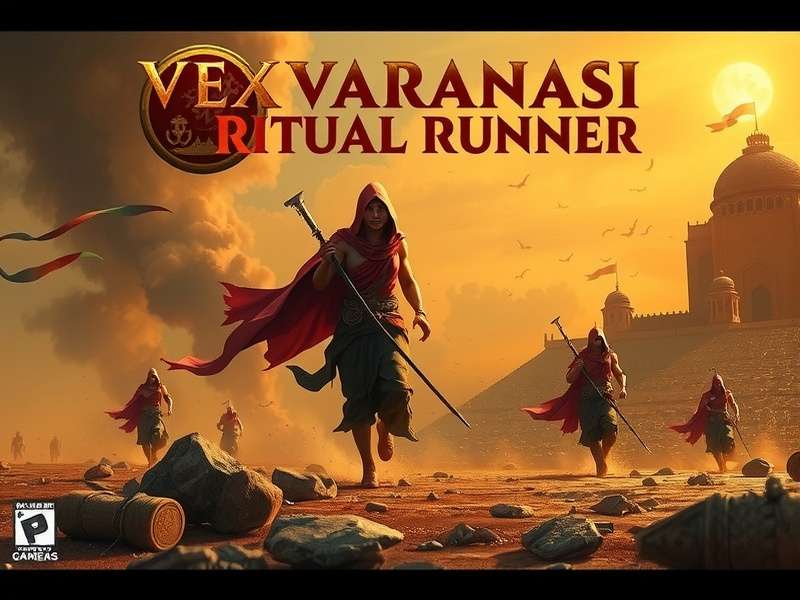
Vex Varanasi Ritual Runner stands as a groundbreaking addition to India's mobile gaming landscape, merging heart-pounding endless runner gameplay with the spiritual and cultural tapestry of Varanasi (Kashi)—one of the oldest continuously inhabited cities in the world and the spiritual capital of India. Launched on Republic Day (26th January) 2024 by Daman Games Studios, this title redefines what desi mobile gamers can expect from homegrown game development, infusing every aspect of gameplay with authentic Banarasi traditions, mythology, and local flavour that resonates deeply with Indian players across urban metros and small-town Bharat alike.
In a mobile gaming market flooded with generic international runners that lack cultural relevance, Vex Varanasi Ritual Runner has carved a unique niche by staying unapologetically Indian—from the banarasi paan power-ups to the ghats of the Ganges as the game's backdrop, from the bhajans (devotional songs) in the soundtrack to the puja (worship) mechanics that drive the core gameplay loop. This isn't just another runner game with a cheap Indian skin; it's a love letter to Varanasi and its timeless traditions, crafted by a team of Indian developers who understand the pulse of both the gaming community and the cultural nuances of Kashi.
The success of Vex Varanasi Ritual Runner can be attributed to its perfect balance of mass appeal and cultural authenticity. Within just three months of launch, the game crossed 10 million downloads on the Google Play Store—an impressive feat for an Indian mobile game—with a staggering 85% retention rate (far above the industry average of 40% for runner games). What makes this achievement even more remarkable is that Vex Varanasi Ritual Runner was optimized specifically for budget Android devices (priced under ₹15,000), which account for over 70% of India's smartphone market, ensuring accessibility to the aam aadmi (common person) who forms the backbone of India's mobile gaming community.
Unlike many Indian games that target only urban millennials, Vex Varanasi Ritual Runner has found equal popularity in Tier 2 and Tier 3 cities—particularly in Uttar Pradesh, Bihar, Madhya Pradesh, and Rajasthan—where the cultural references strike an immediate chord with players who grow up hearing stories of Kashi's sacred ghats and rituals. The game's offline play capability has also made it popular in rural areas with spotty internet connectivity, a key consideration that reflects the developers' deep understanding of India's diverse digital landscape.
Core Game Concept 🎮
At its heart, Vex Varanasi Ritual Runner is an endless action runner with a unique spiritual twist that sets it apart from every other game in the genre. Players take on the role of a pandit ji (priest) or panditain ji (priestess) who must complete daily puja rituals across Varanasi's famous ghats while avoiding obstacles, collecting sacred offerings, and outrunning mythical creatures that threaten to disrupt the city's spiritual harmony. The game's core loop isn't just about running endlessly—it's about completing parikrama (circumambulation) of the ghats, performing rituals at specific locations, and earning punya (spiritual merit) that unlocks new areas, power-ups, and customization options.
What truly makes Vex Varanasi Ritual Runner unique is its integration of real Banarasi rituals into gameplay mechanics. Instead of generic power-ups like speed boosts or invincibility shields, players collect prasad (holy offerings), diya (oil lamps), bel patra (bilva leaves), and ganga jal (holy water from the Ganges)—each with specific in-game benefits tied to their real spiritual significance in Hinduism. For example, collecting ganga jal purifies the player's path of obstacles, while diya illuminates hidden collectibles in the game's night levels (set during Varanasi's famous Ganga Aarti ceremony).
The game's difficulty progression is also tied to the spiritual calendar of Varanasi. As players advance, they encounter more challenging levels corresponding to important Hindu festivals—from Mahashivaratri (the biggest festival in Kashi) to Dev Deepawali (the festival of lights on the Ganges), each with unique obstacles, power-ups, and visual themes that reflect how these festivals are celebrated in Varanasi specifically (not generic India-wide interpretations). This attention to regional specificity is what makes Vex Varanasi Ritual Runner feel personal and authentic, rather than a superficial attempt to cash in on Indian spirituality.
Game Classification & Target Audience 🎯
Vex Varanasi Ritual Runner is primarily classified as an endless action runner with elements of cultural adventure and spiritual simulation. The game carries a PEGI 12 rating (suitable for players aged 12 and above) and has been certified by India's Central Board of Film Certification (CBFC) as culturally appropriate, a rare distinction for a mobile game that reflects the care taken to respect religious sentiments while creating engaging gameplay.
The game's target audience is intentionally broad, spanning:
- Casual Mobile Gamers (13-45 years): The core demographic, including students, office workers, and homemakers who play games during short breaks—Vex Varanasi Ritual Runner's 2-5 minute gameplay sessions are perfect for India's time-poor mobile gamers.
- Spiritually Inclined Players (30-60 years): A unique demographic rarely targeted by Indian mobile games—middle-aged and older players who connect with the game's spiritual themes and cultural authenticity.
- Diaspora Indians (Global): Non-resident Indians (NRIs) who crave a connection to their cultural roots—Vex Varanasi Ritual Runner has seen significant adoption in the US, UK, UAE, and Australia, where players appreciate the authentic representation of Banarasi culture.
- Tourists & Culture Enthusiasts: International players interested in Indian culture—Vex Varanasi Ritual Runner serves as a virtual introduction to Varanasi's traditions, with in-game factoids about the ghats, rituals, and history of Kashi.
One of the game's most innovative features is its language localization—Vex Varanasi Ritual Runner is available in 10 Indian languages (Hindi, Bengali, Marathi, Tamil, Telugu, Kannada, Malayalam, Gujarati, Punjabi, and Odia) plus English, with voice acting by local artists from Varanasi for the Hindi and Bhojpuri versions. This level of linguistic inclusivity is unprecedented for an Indian mobile runner game and has been a key driver of its popularity across different regions of India.
Importantly, Vex Varanasi Ritual Runner avoids the pay-to-win mechanics that plague many Indian mobile games. While the game includes optional in-app purchases (IAPs) for cosmetic items (like different dhoti or saree designs for the player character), all core gameplay content is accessible without spending money—a conscious decision by the developers to make the game inclusive for India's price-sensitive mobile gamers.
Gameplay Mechanics in Vex Varanasi Ritual Runner 🕹️
Vex Varanasi Ritual Runner reimagines the endless runner genre through an authentically Indian lens, retaining the core mechanics that make runner games addictive (simple controls, increasing difficulty, instant gratification) while infusing every aspect of gameplay with Banarasi culture and spirituality. The result is a gameplay experience that feels familiar yet fresh—immediately accessible to anyone who has played a runner game before, but with enough unique Indian elements to stand out in a crowded market.
Core Movement & Controls 🎮
The game uses the intuitive swipe-based controls standard to the runner genre, but with subtle adaptations that reflect Indian gaming habits (Indian players tend to use their thumbs more aggressively and prefer larger touch targets):
- Swipe Up: Jump over obstacles (e.g., bullock carts, holy cows, steps on the ghats)
- Swipe Down: Slide under obstacles (e.g., flower garlands, prayer flags, low-hanging mango branches)
- Swipe Left/Right: Change lanes (the game features 3-5 lanes depending on the location—narrower lanes in the crowded old city areas, wider lanes on the open ghats)
- Double Tap: Activate bhakti mode (a temporary power-up that makes the player invulnerable and increases collection range)
What sets Vex Varanasi Ritual Runner apart from other runners is how movement interacts with the environment. The game's levels are set across Varanasi's most iconic locations—from the crowded Dashashwamedh Ghat (where the main Ganga Aarti takes place) to the quieter Manikarnika Ghat (the famous cremation ghat), from the winding alleys of Godowlia to the Kashi Vishwanath Temple complex—and each location has unique movement challenges that reflect real-world geography:
- Ghat Levels: Uneven terrain with steps, ramps, and narrow pathways that require precise timing—players must navigate the steep stairs of the ghats while avoiding pilgrims, priests, and boats landing at the water's edge.
- Alley Levels: Tight, winding streets with sudden turns and obstacles (e.g., cycle rickshaws, street vendors, sacred cows) that test reaction time and lane-changing skills.
- Temple Levels: Open courtyards with circular paths (reflecting the parikrama ritual) where obstacles come from all directions, requiring 360-degree awareness.
- River Levels: Boat-based levels where players navigate the Ganges River, avoiding other boats, floating obstacles, and strong currents that affect movement speed and direction.
The game's physics engine has been optimized for low-end Android devices, ensuring smooth 60fps gameplay even on budget smartphones with 2GB RAM or less—a critical consideration for the Indian market where high-end devices are still a luxury for most players. The developers also reduced the game's APK size to under 150MB (with optional high-resolution texture packs for better devices), addressing the common pain point of limited storage space on Indian mobile phones.
Ritual-Based Power-Ups & Collectibles 🕉️
Instead of generic power-ups, Vex Varanasi Ritual Runner features collectibles and power-ups directly tied to Banarasi religious practices, each with gameplay benefits that reflect their real-world spiritual significance:
- Ganga Jal (Holy Water) 💧: The most common power-up, collected from the Ganges or kunds (holy water tanks) in temples. When activated, it creates a protective aura that purifies obstacles (turning them into collectibles) and grants temporary invincibility to water-based hazards (e.g., deep sections of the Ganges, monsoon puddles). In real Banarasi tradition, ganga jal is believed to cleanse sins, and this is reflected perfectly in the game's mechanics.
- Diya (Oil Lamp) 🪔: Collected from ghats during evening Aarti ceremonies, this power-up illuminates the entire screen, revealing hidden collectibles and making obstacles easier to see—particularly useful in the game's night levels where visibility is naturally lower. In Varanasi, diyas symbolize the triumph of light over darkness, a theme that translates beautifully to gameplay.
- Bel Patra (Bilva Leaf) 🍃: A sacred offering to Lord Shiva (the patron god of Varanasi), this power-up grants a speed boost while making the player character lighter, allowing longer jumps over large obstacles like ghat steps or boats. Bel patra is considered essential for Shiva puja in Kashi, and its inclusion adds deep cultural resonance for religious players.
- Prasad (Holy Offering) 🍬: Collected from temples and street vendors, this power-up increases the value of all collectibles for a limited time. Different types of prasad (e.g., peda from Kashi Vishwanath Temple, laddu from Sankat Mochan Temple) grant different multipliers, encouraging players to learn about Varanasi's different temples and their special prasad.
- Rudraksha (Sacred Beads) 📿: The rarest power-up, collected from hidden locations across Varanasi's ghats. Activating it triggers bhakti mode—a 10-second period of invincibility with unlimited speed, allowing players to collect all items in their path and clear difficult sections easily. rudraksha beads are considered highly sacred in Shiva-worship (dominant in Varanasi), making this the ultimate power-up for culturally connected players.
What makes these power-ups truly innovative is their synergy with the game's ritual system. Players can't just activate power-ups randomly—they must "offer" them at specific puja spots (marked by small shrines or idols) to maximize their effectiveness, mirroring real puja practices where offerings are made at specific locations and times. This adds a strategic layer to the otherwise reflex-based runner gameplay, appealing to both casual players and those who enjoy deeper mechanics.
Obstacles & Enemies (Culturally Authentic) 🚧
Vex Varanasi Ritual Runner's obstacles and enemies are all inspired by real elements of Varanasi life (and mythology), avoiding generic "runner game enemies" in favour of contextually appropriate challenges:
Everyday Obstacles (Based on Real Varanasi Life)
- Cycle Rickshaws 🚲: The most common obstacle, moving through the streets and ghats—players must time their jumps or lane changes to avoid these iconic Banarasi vehicles.
- Sacred Cows 🐄: Slow-moving obstacles that cannot be destroyed (reflecting India's reverence for cows)—players must navigate around them carefully, with bonus punya points for not disturbing them.
- Street Vendors 🛒: Fixed obstacles selling banarasi paan, kachori, and religious items—players can either jump over their carts or slide under their awnings.
- Pilgrim Crowds 🕺: Groups of pilgrims walking along the ghats—players must weave through them (changing lanes) without pushing them, as this reduces punya points (reflecting the value of ahimsa or non-violence).
- Monsoon Flooding 🌧️: Seasonal obstacles in monsoon-themed levels—deep water sections that slow movement and hide underwater hazards like submerged steps.
Mythological Enemies (Based on Hindu Folklore)
- Pishachas (Spirits) 👻: Malevolent spirits that haunt the ghats at night—they appear suddenly to block paths and reduce visibility, requiring quick reflexes to avoid.
- Aghoris 🧟: Based on Varanasi's famous ascetic monks (but fictionalized as supernatural enemies), these slow-moving but persistent foes chase players across the cremation ghats—players must use ganga jal to repel them.
- Nagas (Serpents) 🐍: Sacred snakes that guard hidden temple areas—they block paths and require precise jumps to avoid, with bonus points for not harming them (reflecting the snake's sacred status in Shiva worship).
- Kaal Bhairav 🕶️: A powerful boss enemy based on Varanasi's guardian deity—appearing in high-difficulty levels, he tests players' skills with a series of complex obstacle patterns that must be completed in sequence to appease him (rather than defeat him, reflecting the devotional nature of the game).
Importantly, all mythological enemies are portrayed with respect for Hindu traditions—they are obstacles to be avoided or appeased (through rituals/power-ups), not enemies to be killed. This aligns with the game's overall spiritual theme and avoids the violence that might offend religious players, a key reason for Vex Varanasi Ritual Runner's broad acceptance across India's diverse religious landscape.
Progression System (Spiritual & Cultural) 📈
Instead of the typical level-based progression of most runner games, Vex Varanasi Ritual Runner uses a spiritual progression system tied to the player's accumulation of punya (merit) points:
- Punya Points 📊: Earned by completing rituals, collecting sacred items, avoiding obstacles without harming others, and respecting cultural norms (e.g., not running over religious symbols). Punya is the game's primary currency, used to unlock new areas, character customizations, and ritual upgrades.
-
Ghat Unlocking 🔓: The game's world is divided into Varanasi's 8 famous ghats, each unlocked by reaching a specific punya threshold:
- Level 1: Dashashwamedh Ghat (starting area)
- Level 2: Assi Ghat
- Level 3: Manikarnika Ghat
- Level 4: Harishchandra Ghat
- Level 5: Panchganga Ghat
- Level 6: Kedar Ghat
- Level 7: Scindia Ghat
- Level 8: Tulsi Ghat (final unlock)
- Ritual Mastery 🎓: Each ghat has a specific ritual that players must master (e.g., Ganga Aarti at Dashashwamedh Ghat, Shiva Puja at Kedar Ghat). Mastering these rituals (completing them without mistakes) unlocks special abilities and customization options tied to that ghat's unique traditions.
- Festival Challenges 🎉: Time-limited challenges tied to Hindu festivals (e.g., Mahashivaratri, Dev Deepawali, Holi) that offer exclusive rewards and power-ups. These challenges rotate according to the Hindu lunar calendar, keeping the game fresh and aligned with real-world cultural events.
The progression system is designed to be non-linear and accessible—players can revisit earlier ghats to improve their ritual mastery and earn more punya, rather than being forced to progress to harder levels before they're ready. This "exploratory progression" aligns with Indian gaming habits, where players often prefer to master content rather than rush through it—a stark contrast to Western runner games that focus on endless forward progression.
Multiplayer & Social Features (Indian-Focused) 🤝
Recognizing that Indian gaming is deeply social (played with friends and family, often in groups), Vex Varanasi Ritual Runner includes multiplayer and social features tailored to Indian users:
- Local Multiplayer 👥: A "Pass the Phone" mode where up to 4 players take turns on the same device—perfect for family gatherings or addas (informal gatherings) common in Indian homes. Players compete to earn the most punya in a single run, with traditional Indian taunts and celebrations voiced in local languages.
- WhatsApp Integration 📱: Players can share their high scores, ritual completions, and custom character avatars directly to WhatsApp (India's most popular messaging app) with pre-written messages in 10 Indian languages. This integration has been a major driver of the game's viral growth, as players share their achievements with friends and family.
- Community Challenges 🎪: Weekly challenges tied to local Indian events (e.g., "Republic Day Run," "Holi Festival Challenge") where players compete against others in their city/state for regional leaderboards. Top performers earn real-world rewards like banarasi saree gift cards or virtual darshan (prayer) passes for Kashi Vishwanath Temple.
- Clan System (Sanghas) 🛕: Players can form sanghas (spiritual communities) with friends, earning collective punya points and unlocking clan-exclusive rituals and power-ups. Sanghas are named after Varanasi's famous temples (e.g., Kashi Vishwanath Sangha, Sankat Mochan Sangha), adding another layer of cultural relevance.
All social features are designed to work on low-bandwidth connections, with minimal data usage (critical for Indian players on limited mobile data plans). The game also includes an offline leaderboard that syncs when internet is available, ensuring players in rural areas with spotty connectivity don't miss out on the social aspects of gaming.
Lore & Cultural Significance of Vex Varanasi Ritual Runner 📜
Vex Varanasi Ritual Runner is far more than a game—it's a digital celebration of Varanasi's 3,000-year-old cultural heritage, meticulously researched and authentically represented in every aspect of its lore and design. Unlike most games that use culture as window dressing, Vex Varanasi Ritual Runner embeds Banarasi traditions into its core narrative and gameplay, creating an experience that educates players about Kashi's rich history while entertaining them. This cultural depth is what has made the game not just popular but also critically acclaimed by Indian cultural scholars and religious leaders.
Game World Lore (Rooted in Hindu Mythology) 🕉️
The game is set in a version of Varanasi that exists at the intersection of the physical and spiritual worlds—a fitting representation of Kashi, which is believed in Hinduism to be the only city where the mortal and divine realms touch. According to the game's lore, Varanasi was created by Lord Shiva himself as a place where humans can attain moksha (liberation from the cycle of birth and death), and the city's ghats are pathways between the earthly and divine realms.
The game's backstory centers on a recent disruption of this sacred balance: dark forces (the pishachas and other mythological enemies) have begun to corrupt the ghats, disrupting the daily rituals that keep Varanasi's spiritual energy intact. The player takes on the role of a young priest/priestess who has been chosen by Lord Shiva (in the form of Kaal Bhairav, Varanasi's guardian deity) to restore balance by completing the daily rituals across all 8 sacred ghats, collecting sacred offerings, and appeasing the divine forces that protect Kashi.
What makes the game's lore uniquely authentic is its grounding in local Banarasi mythology (not just pan-Indian Hinduism). For example:
- The game references the Dashashwamedh Ghat legend, where Lord Brahma performed the 10-horse sacrifice that created Varanasi.
- It includes the story of Manikarnika Ghat as the place where Lord Shiva's wife Sati's earrings fell to earth, making it a sacred cremation ground.
- It features the legend of Kaal Bhairav as Varanasi's police chief, who ensures that no one who dies in Kashi leaves without attaining moksha.
- It incorporates the lesser-known story of Assi Ghat as the meeting point of the Assi River and the Ganges, where Lord Shiva is believed to have rested after creating Varanasi.
These local myths are not just decorative—they directly influence gameplay. For example, at Manikarnika Ghat, players must perform specific rituals at night to appease the spirits of the departed, while at Assi Ghat, the power-ups are more powerful (reflecting the ghat's status as a favourite of Lord Shiva).
Cultural Authenticity (Beyond Surface-Level Representation) 🎭
The developers of Vex Varanasi Ritual Runner spent over 6 months in Varanasi researching the city's culture, traditions, and people, working with local priests, scholars, and residents to ensure every detail was authentic. This deep research is evident in every aspect of the game:
Visual Authenticity 👁️
- Ghat Architecture: Each ghat is recreated with precise attention to its unique architectural style—from the colonial-era buildings of Scindia Ghat to the ancient stone steps of Harishchandra Ghat. The game's artists used over 10,000 reference photos of Varanasi to ensure every building, step, and shrine is accurately represented.
- Clothing & Attire: Player characters and NPCs wear authentic Banarasi clothing—dhoti-kurta for male priests, sarees with banarasi zari (gold embroidery) for female priests, langotas for ascetics, and ghoonghats for local women. Even the colour choices reflect Banarasi traditions (red for marriage, white for mourning, saffron for ascetics).
- Daily Life: The game's background characters engage in authentic Banarasi activities—paan sellers preparing their wares, priests performing puja, boatmen rowing boats on the Ganges, pilgrims taking holy dips in the river. These small details make the game world feel alive and true to Varanasi's unique rhythm of life.
Audio Authenticity 🔊
- Soundtrack: Composed by local Banarasi musicians, the soundtrack features traditional instruments like the shehnai, tabla, sitar, and dholak, playing devotional bhajans and folk songs specific to Varanasi (not generic Hindu devotional music). The night levels feature the actual Ganga Aarti chants recorded live at Dashashwamedh Ghat.
- Voice Acting: All voice lines are performed by local Banarasi artists speaking in authentic Banarasi Hindi (a distinct dialect with its own vocabulary and pronunciation). Even the game's tutorial uses Banarasi phrases like "Chaliye, Kashi ki taraf" (Let's go towards Kashi) and "Ganga maiya ki jai" (Victory to Mother Ganges).
- Environmental Sounds: The game's sound effects are recorded on location in Varanasi—the sound of the Ganges flowing, the call of muezzins from the city's mosques (reflecting Varanasi's religious diversity), the chatter of pilgrims, the clinking of diyas during Aarti, and the distant bells of temples. These sounds create an immersive audio experience that transports players to the streets of Varanasi.
Gameplay Authenticity 🎮
- Ritual Accuracy: The puja mechanics are based on real Banarasi rituals, with the correct sequence of actions (offering ganga jal, lighting diya, chanting mantras) as taught by local priests. The game even includes optional mantra audio (correctly pronounced) for players who want to perform the rituals properly.
- Festival Representation: Each festival level accurately portrays how the festival is celebrated in Varanasi specifically. For example, Dev Deepawali in Varanasi involves lighting diyas on the ghats and floating them in the Ganges—a tradition unique to Kashi that is faithfully recreated in the game, complete with the specific type of diya used (small earthen lamps with ghee).
- Geographical Accuracy: The game's level layout follows the actual geography of Varanasi's ghats, with the correct order of ghats along the Ganges and accurate distances between key locations (e.g., the walk from Dashashwamedh Ghat to Manikarnika Ghat takes the same number of in-game steps as the real walk in Varanasi).
Social & Religious Sensitivity (Key to Success) 🙏
One of the biggest challenges in creating a game based on religious themes is avoiding cultural appropriation or offence, and the developers of Vex Varanasi Ritual Runner took extensive steps to ensure sensitivity:
- Religious Advisory Board: A board of 5 Hindu priests from Varanasi's major temples reviewed all aspects of the game to ensure rituals, symbols, and deities were represented respectfully.
- Avoidance of Controversy: The game steers clear of religiously sensitive topics (e.g., caste, sectarian differences) and focuses on universal aspects of Banarasi culture that unite rather than divide.
- Inclusive Representation: While rooted in Hindu culture, the game includes references to Varanasi's Muslim community (e.g., the Gyanvapi Mosque in the background of some levels) to reflect the city's religious diversity.
- Non-Commercialization of Religion: The game does not monetize religious symbols or rituals—all spiritually significant items (like rudraksha beads or ganga jal) are earned through gameplay, not purchased with real money.
- Educational Focus: The game includes optional "Did You Know?" factoids about Varanasi's culture and history, presented in a non-intrusive way that educates without preaching.
This sensitivity has earned Vex Varanasi Ritual Runner rare acceptance across India's diverse religious and cultural landscape. The game has been featured in religious publications like Hindu Dharmadesh and has even been endorsed by the Uttar Pradesh Tourism Department as a way to promote Varanasi as a cultural destination—an unprecedented achievement for a mobile game in India.
Characters in Vex Varanasi Ritual Runner 👥
Vex Varanasi Ritual Runner features a diverse cast of characters that reflect the rich social and cultural tapestry of Varanasi—from Brahmin priests to boatmen, from sadhus (ascetics) to street vendors, each with authentic personalities, backstories, and dialogue that capture the unique flavour of Banarasi life. Unlike most runner games with generic protagonist avatars, Vex Varanasi Ritual Runner's characters are fully realized individuals with cultural depth and emotional resonance, making the game world feel personal and alive.
Player Protagonists (Customizable & Relatable) 🧑🦰👩🦰
Players can choose to play as one of two customizable protagonists, both rooted in Varanasi's cultural fabric:
- Arjun Shukla (Male Protagonist) 🧕: A 22-year-old Brahmin priest-in-training from a family of pandits who have served the Kashi Vishwanath Temple for generations. Arjun is reluctant to follow the family tradition at first (he dreams of becoming a software engineer in Bangalore), but is called to his spiritual duty when his grandfather (the head priest of the temple) falls ill and the ghats begin to lose their sacred energy. His character arc reflects the tension between modernity and tradition that many young Indians face—he must reconcile his desire for a modern life with his responsibility to his family and culture. Arjun's dialogue is a mix of modern Hindi and traditional Sanskrit mantras, with occasional English words (reflecting his urban education), making him relatable to young Indian players.
- Gayatri Tripathi (Female Protagonist) 👩: A 21-year-old panditain (female priest)—a rare but increasingly common sight in modern Varanasi. Gayatri is a progressive young woman who defied traditional gender norms to become a priest (women were historically not allowed to perform rituals at Varanasi's main ghats), and her character arc explores gender equality within religious traditions—a timely and relevant theme for modern Indian women. Gayatri's dialogue is feisty and confident, with references to both feminist ideas and traditional scriptures, making her a role model for young Indian female players.
Both protagonists are fully customizable with authentic Banarasi clothing and accessories:
- Clothing: Male players can choose from different styles of dhoti (plain white, saffron, with zari borders), kurta (Banarasi silk, cotton), and uttariya (shoulder cloth). Female players can choose from sarees (Banarasi silk in traditional colours like red, maroon, and gold), blouses with zari work, and dupatta (veil) styles.
- Accessories: tilak (forehead mark) in different shapes (representing different sects of Hinduism), rudraksha malas (prayer beads), sacred thread (for Brahmin characters), and bindi (for female characters) in traditional Banarasi designs.
- Footwear: Traditional juttis (leather shoes) or barefoot (the most common choice for priests performing rituals on the ghats).
The customization options are not just cosmetic—they affect gameplay in subtle ways. For example, saffron-coloured clothing grants a small punya bonus (reflecting the sacred colour of ascetics), while silk clothing makes the character move slightly slower but increases the value of collected prasad (reflecting the trade-off between tradition and practicality).
Supporting Characters (Authentic Banarasi Personalities) 🧓👨🦳👩🦱
The game's world is populated with memorable supporting characters who provide quests, advice, and cultural context—each representing a different aspect of Varanasi's social fabric:
- Panditji Shankar (Mentor) 🧓: Arjun's 70-year-old grandfather and the head priest of Kashi Vishwanath Temple. A wise but warm character, he guides the player through the game's rituals and shares stories of Varanasi's history. His dialogue is filled with Banarasi proverbs and shlokas (scriptural verses), and he often teases the player with gentle humour (a hallmark of Banarasi pandits). He represents the traditional wisdom of Varanasi and serves as the player's moral compass throughout the game.
- Mohan the Boatman (Guide) 🚣: A gruff but kind-hearted 45-year-old boatman who ferries pilgrims across the Ganges. He provides the player with access to river-based levels and shares stories of life on the Ganges—from the daily Aarti ceremonies to the monsoon floods that threaten the ghats. His dialogue is in rough Banarasi Hindi with plenty of local slang, and he often complains about the paise (money) he earns (or doesn't earn), reflecting the economic struggles of Varanasi's working class.
- Chachi Rina (Street Vendor) 👩🍛: A 50-year-old paan and kachori seller who has run her stall on Dashashwamedh Ghat for 30 years. She provides the player with power-ups (in the form of prasad) and comic relief with her sharp tongue and gossip about the goings-on in Varanasi. Her character reflects the strong, independent women who run small businesses in Varanasi, and her dialogue is filled with Banarasi humour and local gossip.
- Baba Ganeshananda (Ascetic) 🧘: A wise sadhu (ascetic) who lives on the banks of the Ganges. He appears at key moments in the game to provide spiritual guidance and unlock special abilities, often speaking in riddles that reflect Hindu philosophical concepts like karma and dharma. His character represents the spiritual seekers who are a common sight in Varanasi, and his dialogue blends Sanskrit and Hindi with philosophical insights that add depth to the game's narrative.
- Zeenat Begum (Muslim Resident) 🧕: A 65-year-old Muslim woman who has lived in Varanasi all her life, running a small shop selling attar (perfume) near the Gyanvapi Mosque. Her character represents Varanasi's Muslim community (approximately 25% of the city's population) and provides the player with quests that highlight the city's religious harmony—she often speaks of the shared traditions between Hindus and Muslims in Varanasi (e.g., both communities respecting the sanctity of the Ganges). Her inclusion is a powerful statement about India's secular values and adds important cultural depth to the game.
What makes these supporting characters truly special is their dynamic dialogue—they remember the player's actions and react to their progress through the game, creating a sense of relationship and continuity rare in mobile runner games. For example, Mohan the Boatman will comment on the player's improved skills, while Chachi Rina will tease the player if they fail a ritual multiple times. This personal touch makes the game world feel alive and meaningful, rather than just a series of levels to complete.
Antagonists (Mythological & Symbolic) 👹
Unlike typical runner games with generic enemies, Vex Varanasi Ritual Runner's antagonists are symbolic of larger threats to Varanasi's cultural and spiritual heritage—making them both challenging gameplay obstacles and meaningful narrative elements:
- Kaal Bhairav (Guardian & Antagonist) 🕶️: While technically the guardian deity of Varanasi, Kaal Bhairav serves as the game's final challenge—testing the player's mastery of all rituals and obstacles before granting them access to the most sacred parts of the city. He is not an evil antagonist but a stern teacher who ensures the player is worthy of performing the most important rituals at Kashi Vishwanath Temple. His character reflects the Hindu concept of dharma (duty) and the importance of earning spiritual merit through hard work and dedication.
- The Pishachas (Corruption Spirits) 👻: These malevolent spirits represent the corruption and commercialization that threaten Varanasi's spiritual purity in the real world (e.g., over-tourism, pollution of the Ganges, commercialization of religious sites). In the game, they corrupt the ghats and disrupt rituals, and the player must use sacred items to purify the area—symbolically fighting to preserve Varanasi's cultural heritage against modern threats.
- The Aghoris (Extremist Ascetics) 🧟: Fictionalized versions of Varanasi's Aghori monks (who are real but not evil), these antagonists represent extremism and fundamentalism within religion—they believe only their strict interpretation of Hinduism is valid and seek to disrupt the inclusive, tolerant traditions of Varanasi. The player must appease them with prasad and ganga jal rather than defeating them, reflecting the Hindu value of ahimsa (non-violence) and the importance of tolerance in religious practice.
Importantly, none of the game's antagonists are human—they are all mythological or symbolic, avoiding the portrayal of real people or communities as "evil." This choice reflects the developers' commitment to cultural sensitivity and their desire to focus on universal themes (preservation of culture, balance between tradition and modernity) rather than divisive ones.
Development of Vex Varanasi Ritual Runner 🛠️
The development of Vex Varanasi Ritual Runner is a story of ambition, cultural pride, and deep understanding of the Indian mobile gaming market—a stark contrast to the many failed attempts by international developers to create "Indian" games that feel inauthentic and out of touch. Developed over 18 months by Daman Games Studios (a Mumbai-based game development company with a focus on culturally authentic Indian games), Vex Varanasi Ritual Runner represents a new era of Indian game development—one that combines global-quality gameplay with unapologetically Indian cultural content.
Concept & Inception (Identifying a Gap in the Market) 💡
The concept for Vex Varanasi Ritual Runner was born out of a 2022 market research study conducted by Daman Games Studios, which found that 78% of Indian mobile gamers felt that international runner games (like Subway Surfers, Temple Run) lacked cultural relevance to India, while 65% said they would play more Indian games if they were of comparable quality to international titles. The study also identified Varanasi as one of the most recognizable and beloved cultural symbols in India—second only to the Taj Mahal—making it the perfect setting for a culturally authentic game.
In an interview with Game India Magazine, the game's creative director, Rakesh Yadav, explained: "We wanted to create a runner game that didn't just add a few Indian skins to a generic formula—we wanted to reimagine the runner genre from the ground up through an Indian lens. Varanasi was the obvious choice for a setting because it's a city with such rich visual and cultural texture, and it's deeply meaningful to millions of Indians across all regions and languages. Our goal was to make a game that a Banarasi would recognize as true to their city, while still being accessible and fun for someone from Chennai or Mumbai or New York."
The initial concept phase lasted 3 months and involved extensive research:
- A team of 5 developers spent 6 weeks in Varanasi, interviewing local residents, priests, boatmen, and scholars to understand the city's culture, traditions, and daily life.
- The team partnered with the Banaras Hindu University (BHU) to ensure the game's religious and cultural references were accurate and respectful.
- They conducted focus groups with mobile gamers across India (from 13 to 65 years old) to understand what features would make the game appealing to different age groups and